
Websites Weren't Built for AI Agents
Structured data and secure APIs, not fancier web forms
Websites weren't built for the next generation of customers: AI agents.
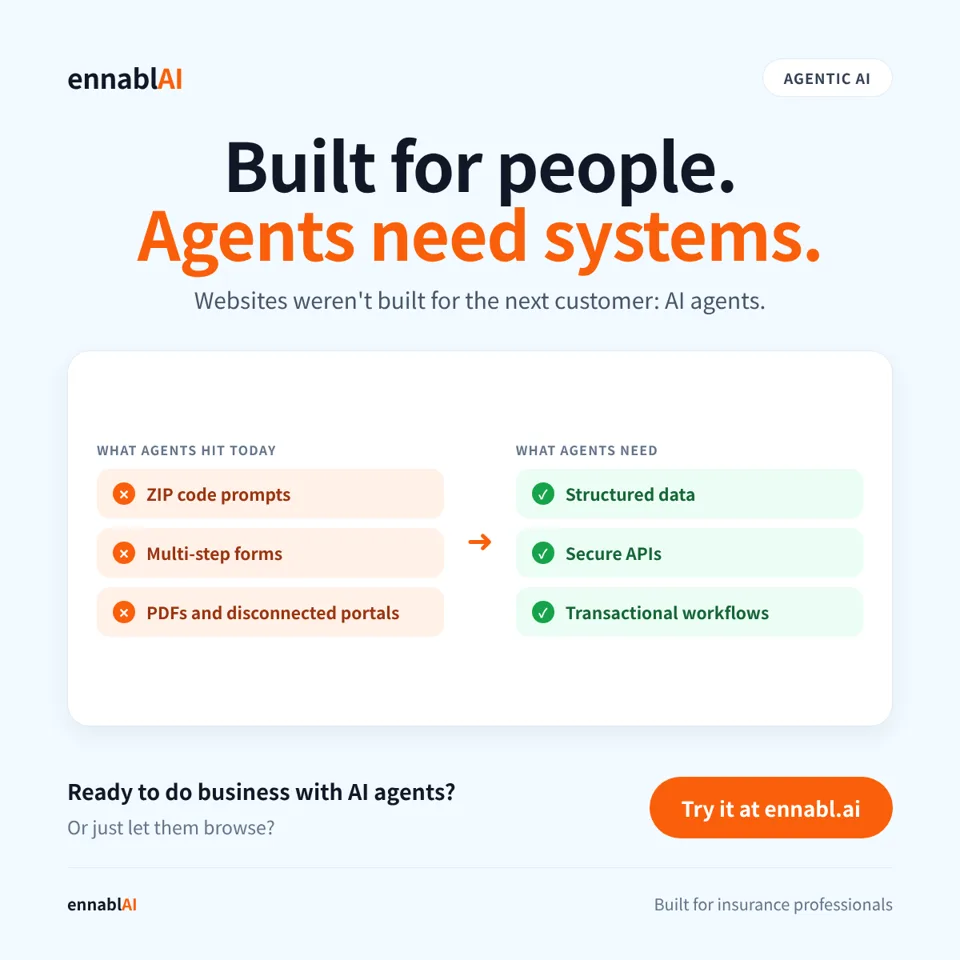
I'm seeing this firsthand in insurance, working on the ennabl AI agentic platform. Getting basic information from a carrier website often means navigating ZIP code prompts, multi-step forms, PDFs and disconnected portals. The agent can do the work, but the website gets in the way.
It isn't just insurance. I spent years building digital experiences in banking, where even finding deposit interest rates can take multiple steps. We designed these experiences for humans, not for machines acting on their behalf.
Every business needs to rethink its digital strategy
As ChatGPT, Claude and Grok expand their agent capabilities, every business with a website needs to rethink its digital strategy.
In insurance, imagine an AI agent comparing homeowners insurance across ten carriers. It needs underwriting appetite, coverage options, eligibility rules and accurate pricing. It shouldn't have to navigate ten different websites to get there.
Make systems accessible to agents
At ennabl, building agentic capabilities keeps reinforcing one point: the opportunity isn't building smarter agents to navigate broken experiences. It's making systems accessible to agents in the first place.
That means structured data, secure APIs and transactional workflows, not more sophisticated web forms.
Human-facing websites will remain important. But the next competitive advantage, for insurance carriers and for any business with a website, may have little to do with website design.
Is your company ready to do business with AI agents, or just let them browse?